Showing posts with label tutorial. Show all posts

Thursday, February 13, 2014

New Window Star Tutorial with printable pattern


I love making window stars out of kite paper. The way they seem to glow as the light shines through the translucent paper is almost magical. I've been wanting to share this wonderful new kind of window star with you for a while now, and with the end of winter nowhere in sight at the moment, today seemed like a great time to do it! (Is it just me or does this winter really seem to be dragging on and on and on. My husband and mom assure me that I feel like this every February.) Well, I guess that is why I enjoy my pretty window stars even more at this time of the year. They give us something bright and happy to look at when almost everything outside of our windows is grey and cold and hibernating.


♥Our Valentine inspired window star♥


For this tutorial you'll need paper. Each star is made from 10 individually folded stars. We used this kite paper from Palumba, but many natural toy retailers carry it. (Not an affiliate link, just informational!) You'll also need a copy of the pattern I drew up.  (The link for the pattern is {now*}at the end of this post.) I've included 2 sizes for the pattern so if you have the 6.25 inch square kite paper like we do you can simply print out the pattern and the largest size can be used with a whole sheet of paper with the least amount of waste possible. The smaller sized pattern has been made to work perfectly with the same size paper that has then been folded into quarters to make approximately 3 inch squares. And lastly you'll need a pair of scissors and a glue stick. 


First you'll need to cut our your pattern and then cut out 10 pentagon shapes for each window star you'd like to make.


Matthew helped me make our stars. This is a great project for bigger kids. 


After you have your pentagons cut out you'll need to make the creases for your stars. I've included lines on the patterns to show you where to fold the stars.


Next you'll need to make a small cut into the center section between each of the points of the star.


Fold each of the flaps you created on each point inwards to turn your pentagon into a star. 


Once you have all 10 stars folded you can decide how you want them to be arranged in you window star.


Next you'll need to place the star (flap side up) with one point facing you and 2 points facing away from you. Then you'll need to open  up one flap on the top left point as shown above and then fold up the bottom point of the star so your window star will have that lovely wreath shape. Repeat those steps with all of your stars. 


Now look at the picture above. You'll need to take the unfolded flap and tuck it behind the star to it's left. the point just below the one with the flap will then be tucked under the folded up point of the star to the left. Once you have those in place you'll want to fix them there with a bit of glue. (I really do find that glue sticks work wonderfully with this kind of paper)


Continue following the last steps connecting all of your little stars to form the big one. 


Once your window star if formed, you can glue down each of the folded up flaps. If there are any remaining flaps that don't seem to want to stay folded down you can glue them into place as well. Sometimes I do, but if they are staying nicely in place I don't worry about it. 


TaDa! You can now hang your beautiful star in the window for the light to shine through. (We use a bit of glue stick to hang our stars. It washes off easily with a bit of warm water when your ready to take them down.) 


Aren't they lovely?! I just love bright happy things. And these window stars make our winter view so much more cheerful! 

You should be able to open it and print it out onto a full size piece of paper to get the appropriately sized pentagons for your stars. 
Somehow I got distracted just as I was going to publish this post this morning and forgot to include the pattern link...oops! But now it's fixed...so that's good! 

Sharing with Linda for Creative Friday and Skip to my Lou.

Thursday, August 22, 2013

Simple Weaving with Kids Tutorial

This was another post I've had in draft for a couple of years. I originally made it as a guest post for the Home-Spun Threads blog. I was going through my list of posts and found a few drafts for fun tutorials and wanted to share them on my own blog!


Today I am going to show you how to make a simple loom out of cardboard and introduce your children to weaving.

For this project you'll need the following:
Cardboard for the loom, scissors, tape, yarn and a large tapestry needle.

We used an empty cereal box for our loom. I just helped the boys cut out the back of the box and then we folded it in half and secured with tape to make a sturdier loom. The nice thing about this type of weaving is you can make your loom (And finished project) any size you want. Remember if you are working with little ones that the bigger the loom is, the longer the weaving takes to complete! Our looms where about 5 by 7 inches.

 Mark the top and bottom edges of your loom every 1/4 inch. I found it works best if you begin and end your marks about 1 inch from the edge of the cardboard.

 Make small cuts about 1/4 inch long on each mark for you to wind your vertical threads (called the Warp Threads)

Begin winding your yarn for the Warp. Do not just wind all the way around the loom.  You only want the warp threads looping over the tabs cut in the top and bottom of the loom and you do not want them winding from top to bottom on both front and back of your loom. (This is a bit difficult to explain, but in the next picture showing the back of the loom with the warp threads wound you can see what I mean.)

See what I mean? The warp threads only loop over the tabs cut in the loom and do not cover the back of the loom like they do in the front. The ends of the yarn are taped onto the back of the loom to keep them out of the way while  your child weaves.

Now the fun begins! Have your child choose the first color of yarn for his weaving and thread it onto a large (blunt) tapestry needle. We used about 4 to 5 feet of yarn and had it doubled through the needle so each child had about 2 feet of yarn to work with at a time (A bit longer for bigger kids.) Leave a tale of yarn so it can be tied off later. We taped our tales to the back of the loom before beginning weaving  so they wouldn't get in the way. Start weaving by going over and under every other Warp string.  When you reach the end of the row, come back the other way going "over" where you went "under" and "under" where you went "over" before. The yarn that goes back and forth is called the Weft string, we like to double it because it helps the weaving go a bit faster the bulkier the yarn is!

 After you have 4 or five rows completed you will need to push all of your Weft strings to the top (or bottom) of your weaving. A fork comes in handy for this.


Or you can use your fingers to tighten the weft strings!


It's easy to make stripes and change colors while you are weaving. Simply cut your weft yarn off the needle, leaving a tail and tape it onto the back  of your loom. Then string another length of different colored yarn onto your needle and tape the tail onto the back side of the loom and start weaving where you left off with the last color, always being careful to follow the over, under, over, under pattern! 


 When your weaving is complete it is time to tie up all of the loose ends. Younger children may need help tying everything off. Start on the sides tying the weft string tails into nice square knots close to the edge of the weaving. You can cut the tails pretty close if your knot is secure.

 Next slip the loops off of the tabs of your loom. We found it easiest to snip each loop one at a time and knot it, rather than cutting them all at once and then trying to figure out which ends went together!

The ends can be left like this as a fringe or they can be trimmed to make a neater edge.

My kids' finished projects. They couldn't wait for their daddy to get home to show him what they had made! 

Linking up at Made by you Monday!

Monday, June 11, 2012

Guest Post Toy Tutorial over at Twig and Toadstool!


Hi everyone! After days and days of not having internet or phone the internet company finally sent someone
over to figure out what was up... turns out one of our dogs dug up a "hidden underground" cable and chewed it to bits. Uggh. These are the times when I really think I am not a dog person.

 Anyway they just now got everything up and running again and I wanted to pop on here to tell you all that I have a guest post over at Twig and Toadstool that went live this morning! I wrote up a tutorial on how to make your very own Comet throwing toys. Hop over to learn how to make one for yourself! And while you are there you can join the link party and post about any crafty things you've made lately!


Saturday, April 7, 2012

Botanical Eggs, Etched Eggs, and Toddler Eggs!


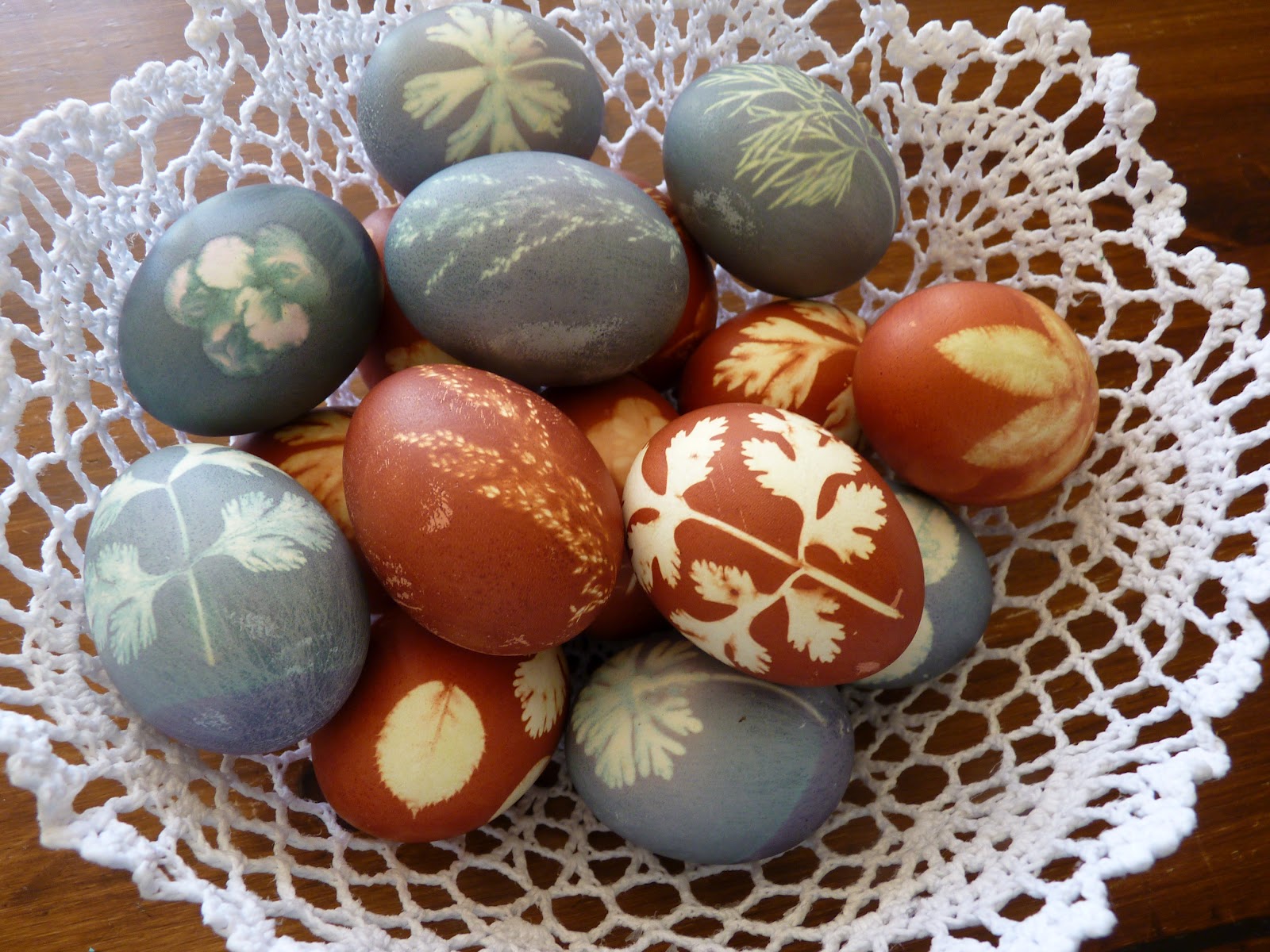
Naturally Dyed Botanical Eggs: A tutorial of sorts. To make these pretty eggs we used yellow onion skins for the red-brown eggs and purple cabbage for the lovely blue ones. We went out to the garden and gathered lots of pretty little leaves, flowers and seed heads. 


A few more things you'll need to have on hand: Raw eggs (we used white eggs, I've heard that they turn out pretty using brown ones too, but this is what we had on hand) Rubber bands, scissors, and pantyhose.

 Wet the (raw) egg with a bit of water and place the botanical pieces face down where we want them. The water helps the leaves and flowers hold still while we tie everything up with a square of pantyhose.


 Wrap the square of pantyhose tightly around the egg and greenery and fasten with a rubber band.

 Eggs all wrapped up and ready to be boiled with dyestuff.

For the red brown colored eggs we placed them on a bed of onion skins with 2 tablespoons of vinegar and enough water to cover everything. We brought it to a slow boil and let them cook gently for about 15 minutes (turn it down a bit so the eggs don't rock around too much while cooking and crack!) After 15 minutes turned off the heat and let them sit in the dye bath for another 15 minutes or so. Rinsed with cool water and cut off the rubber band. Removed the pantyhose and the greenery and admired our beautiful eggs! 


For the blue eggs I chopped up and boiled a half of a head of purple cabbage with a couple of tablespoons of vinegar for 30 minutes. (I read online that if you boil the eggs with the cabbage leaves they can turn out splotchy... don't know if that is true, but we didn't want to chance it.) After it boiled I strained the leaves out and returned the purple juice to the pot and let it cool before adding our prepared eggs. After the eggs where in the pot we brought it to a slow boil and cooked the eggs for 15 minutes. Turned the heat off and let the eggs sit in the dye bath for at least 15 minutes more. Carefully removed the rubber bands, pantyhose and leaves/flowers/seed heads, rinsed and admired our pretty blue Easter Eggs!


The following are Etched Easter Eggs! Not something to attempt with small children as it involved scratching the designs on the dyed egg with a razor blade! A nap time endeavor for sure!

First we just dyed our eggs (blown eggs) using regular egg dye (food coloring) Then the boys and I drew designs on the eggs in pencil (Draw lightly, so you don't crack the egg and any lines left after etching can be erased.)

Once a design has been decided on and drawn you can begin etching. We used box cutters which have nice short sharp blades and sturdy handles.


 Matthew's etched egg designs: Mama bird and her chicks, and a fairy.


Logan made geometric designs.


Ethan says his red egg's design is a flower, abstract I think :-)
I made the yellow dandelion egg and the aqua blue one on the top left with the flowers etched on it. These eggs were inspired by this artist on etsy. Hers are real works of art!! We had fun trying this out, but I think it will be a few years before we reach her level of expertise! ha!

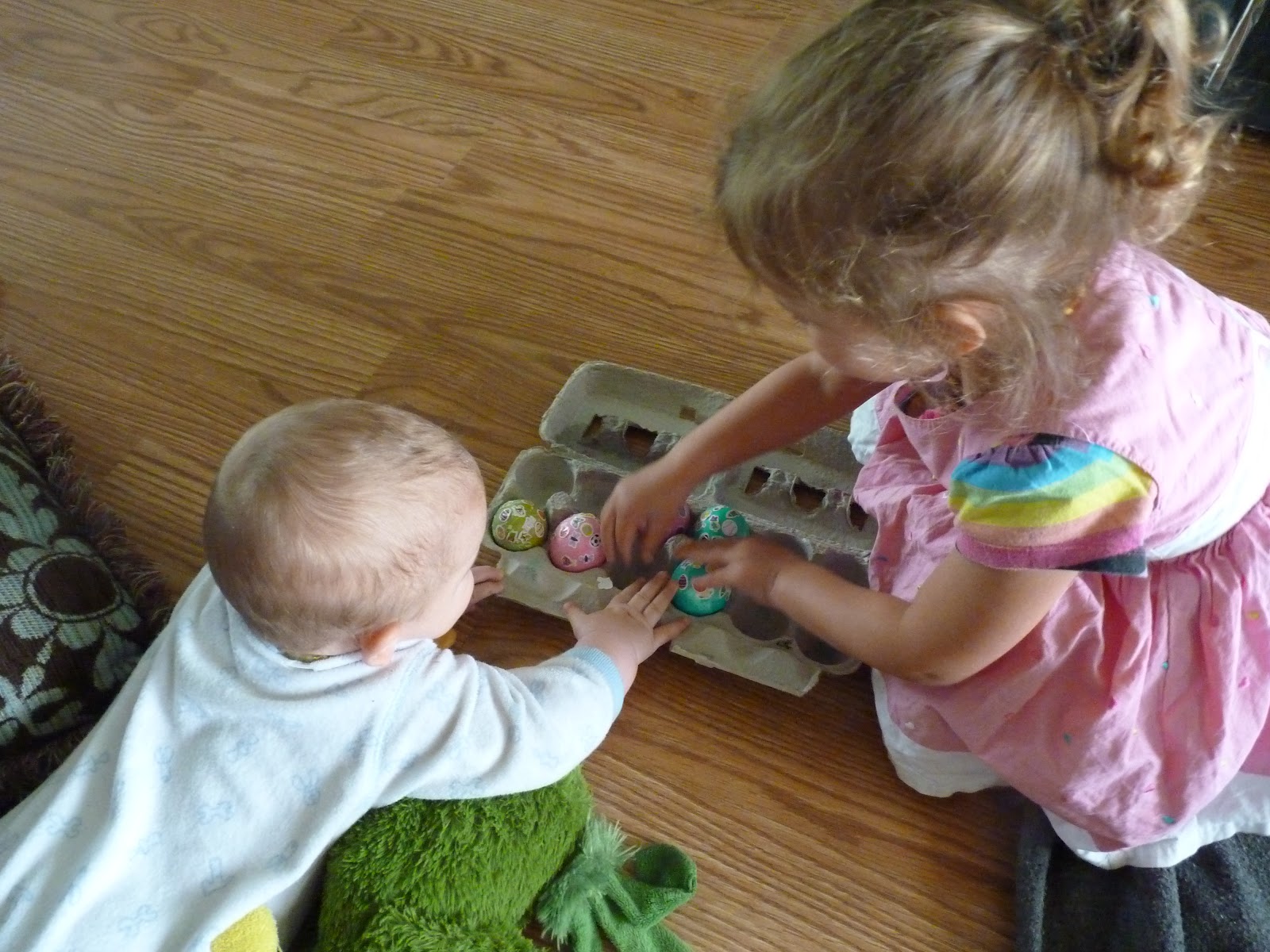
And before nap time we let Claire dye her Easter eggs! This year was the first time she got to join in the fun. I hard boiled 6 eggs just for her and gave her only 3 colors of dye. I thought it best to limit her choices, to make everything go more smoothly.


Only one egg was broken beyond usability. The other 5 she decorated with stickers and declared them beautiful!


As soon as she finished dyeing her eggs I laid her down for her nap. The minute she woke up she wanted to see her eggs again.  I took them out of the refrigerator and she carried them over to her baby brother so he could see her pretty eggs!

She showed him the eggs, explaining about each one, and all of the stickers... He thought they were pretty too. I know this because Claire told me "See Mommy? Emmett like them, my eggs. He says they're pretty, Mommy!"


Related Posts with Thumbnails